
Once students enter high school, they will have self-confidence and academic confidence to take AP classes and earn college credit by passing the AP test.
Study skills are integral to the curriculum at TCHS. Explicit instruction in study skills begins in 5th grade and becomes progressively more complex. Time management is integrated into the study skills curriculum to provide students with direct, explicit instruction on when, where, and how to complete tasks to their advantage. In addition to explicit instruction, students will engage in project-based learning scenarios to practice new skills and identify personal management techniques that work for them. During both homeroom and in classes, students will receive guidance on life skills that will have a positive impact on their future academic careers and life after school.
During kindergarten, students are gently introduced to the school’s routine, focusing on building a love for learning. Inquiry, exploration, discovery, collaboration, and learning through play are the hallmarks of the TCHS kindergarten.
Over the course of the year, students will begin learning foundational language and math skills. Particular attention is placed on phonics acquisition and basic number sense.
The elementary school focuses on students’ mastery of the foundational Common Core State Standards. As academic rigor increases, students’ academic work is balanced with hands-on PBL experiences to ensure they understand academic concepts and engage higher-order comprehension skills.
Each year, students continually add to the “whole child” educational foundation, enabling them to succeed in middle/high school, college, and beyond. By the end of fourth grade, most students will be ready to transition to a more formal and traditional academic setting, the norm at other local schools.
The fourth-grade year is designed to provide every student with additional instruction and practice to master the Common Core foundational skills. The Cherry Hill School provides individual, data-driven learning, so teachers will give direct, explicit instruction to students in small groups and individually to ensure that any gaps or misunderstandings are addressed before 5th grade.
Project-based learning experiences continue to increase in rigor to ensure students understand how to read, think, and problem-solve.
The fifth grade is students’ introduction to the College Board, reading, writing, and critical thinking techniques. Students start with grade-level materials and explicit direct instruction to access and practice new academic and study skills. Study skills such as time management are also introduced.
Instruction builds on foundational skills to begin in-depth, direct, explicit instruction in reading, writing, and critical thinking, aligned with the specific skills required for Advanced Placement (AP) class success in middle and high school. This, coupled with study skills, prepares students for the rigor of taking Pre- AP (n.d.) classes in middle and high school. While students receive explicit instruction, they continue to develop depth and critical analysis, evaluation, and creation skills through project-based learning experiences.
Middle school begins in 5th grade, transitioning students from mastering the Common Core foundational skills to working on specific content and academic skills in preparation for success in high school, AP classes. While academic content is presented at grade level, an emphasis is placed on students acquiring, practicing, and mastering multiple reading, writing, and problem-solving strategies. During middle school, students continue to apply critical thinking skills with increasing complexity to develop deeper content knowledge, strengthen their critical thinking, and enhance their collaborative communication through Project-Based Learning experiences. The academic content of the Middle school will be based on High School AP class content. Students will begin engaging AP academic content in the sixth grade, as determined by the teacher. Starting in 7th grade, students may earn high school credit for Pre-AP-designated classes taken at TCHS.
Middle school begins in 5th grade, transitioning students from mastering the Common Core foundational skills to working on specific content and academic skills in preparation for success in high school, AP classes. While academic content is presented at grade level, an emphasis is placed on students acquiring, practicing, and mastering multiple reading, writing, and problem-solving strategies. During middle school, students continue to apply critical thinking skills with increasing complexity to develop deeper content knowledge, strengthen their critical thinking, and enhance their collaborative communication through Project-Based Learning experiences. The academic content of the Middle school will be based on High School AP class content. Students will begin engaging AP academic content in the sixth grade, as determined by the teacher. Starting in 7th grade, students may earn high school credit for Pre-AP-designated classes taken at TCHS.
During the 8th-grade year, as a culmination project, each student completes a service project. The service project is designed by the student using the skills they have developed through Project-Based Learning activities. The project is intended to provide students with a culminating task to demonstrate their mastery of the skills and content taught during their time at TCHS, including time management, SEL, Jewish Values, and personal organization and initiative.
Shalom Learning is an integral part of the academic curriculum because it provides a framework for students’ moral decision-making. Self-discipline and grit are skills explicitly taught and actively practiced in PBL scenarios at TCHS. Students build self-efficacy each year, so by the time they enter high school, no challenge will be too daunting.
Personalized Learning Experience
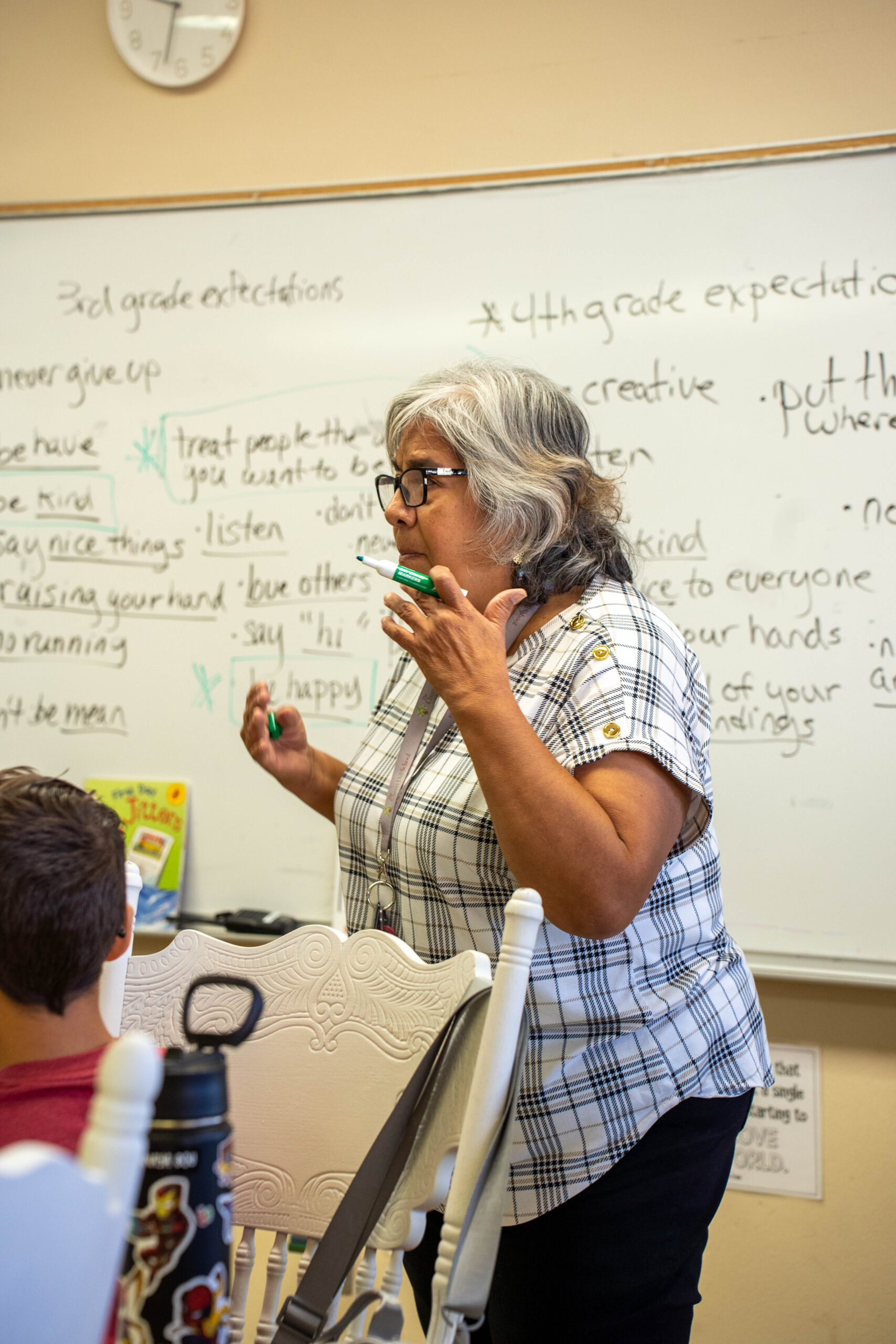
Our students benefit from explicit, direct instruction delivered in individual or small group settings. This method is designed to align with each student’s specific, data-driven education plan, addressing their needs whether they are performing above, at, or below grade level. With fewer distractions in the classroom, students have more opportunities to receive personalized feedback and build nurturing relationships with their teachers.
At Cherry Hill, we believe that education should be a personalized journey for every student. A defining feature of our approach is our commitment to small class sizes, which allows us to develop intentional, individualized education plans tailored to the unique needs of each learner. This focus ensures that every student receives the personalized attention and support they deserve.
At Cherry Hill, we prioritize transparent and ongoing communication between parents and teachers to ensure effective monitoring of student academic performance. This collaboration is essential in ensuring that every student receives the necessary support to thrive, while also enabling parents to access data on their child’s progress easily.
Real-Time Access to Student Progress
Parents and students have online access to assessment scores and progress related to the completion of Common Core Standards. This transparency empowers parents to stay informed about their child’s academic journey, enabling them to address specific learning issues directly with their child and/or the teacher.
Through our online grade book, parents can view their child’s grades and monitor their performance in real-time. Additionally, they receive notifications when classwork or homework is assigned through our eLearning Management System (eLMS). Teachers post assignments in the LMS before assigning them to students and update grades at least weekly, ensuring that parents are always in the loop.
Project-Based Learning Transparency
To enhance transparency in our Project-Based Learning approach, teachers prepare a rubric at the beginning of each project. This rubric serves as a guide, helping students focus on mastering the specific academic skills required for success. The rubric is uploaded into the grade book, allowing parents to see how these skills are being applied in real-life projects.
Throughout each project, teachers continually share the rubric with students to reinforce learning objectives and ensure fidelity in their educational experience. This ongoing communication and structured feedback not only support student growth but also foster a strong partnership between parents and educators, ultimately leading to greater student success.
Engaging Students Through Project-Based Learning
At Cherry Hill, we believe in the power of constructivist Project-Based Learning (PBL) to transform the educational experience. Students engage in projects that span from a week to an entire semester, immersing themselves in solving real-world problems or answering complex questions. This hands-on approach enables them to demonstrate their knowledge and skills by creating a public product or presenting to an authentic audience.

Our dedicated educators meticulously plan all activities to ensure they are purposeful and aligned with the Common Core College and Career Readiness standards. We understand the importance of maximizing educational time, focusing on activities that not only enhance learning but also prepare students for success beyond their time at Cherry Hill.
By fostering an environment of intentional education, we empower our students to thrive academically and socially, equipping them with the skills and confidence they need to navigate their future endeavors.
At Cherry Hill, we emphasize focused instruction that aligns with Common Core Standards, ensuring that every student receives the support they need to thrive. To facilitate this, students are assessed three times a year, providing valuable achievement data that informs the creation of Individual Education Plans (IEPs).
Our dedicated teachers collaborate with students to develop and meet their IEP goals through both individual and small group instruction. This approach explicitly addresses the unique needs of each learner, whether they are performing at, above, or below grade level. By focusing on personalized strategies, we ensure that every student is engaged and challenged in their learning.
This targeted instruction not only guarantees that each student’s educational objectives are successfully achieved but also equips them with a solid foundation for their academic journey. At Cherry Hill, we believe that with clear expectations and tailored support, every student can reach their full potential and excel in their educational pursuits.
Project-Based Learning unleashes a contagious, creative energy among both students and teachers. As students work collaboratively on their projects, they become active participants in their education, taking ownership of their learning journey. This dynamic environment encourages curiosity and innovation, making learning both meaningful and enjoyable.
By integrating real-world challenges into the curriculum, we prepare our students to think critically and creatively, equipping them with the skills they need to succeed in an ever-changing world. At Cherry Hill, we are committed to nurturing a generation of problem solvers and innovators through the power of Project-Based Learning.
What is PBL? PBLWorks. (n.d.). https://www.pblworks.org/what-is-pbl
Pre-AP courses. (2021). https://pre-ap.collegeboard.org/courses